





Healthier streets
Fewer piles means fewer mosquitoes, rats and stray animals, and less smoke from burning.
Our AI device pins every garbage pile with photo, location and time, shares it with contractors and verifies the clean‑up.
Book a demo







It starts with one bag.
Left overnight. Nobody reports it, because everybody assumes someone else will.
It grows.
Garbage attracts more garbage. One bag becomes a dumping spot.
It spreads.
Dogs scatter it, rain carries it into drains, and drains flood in the monsoon.
It's burned.
When it gets too big, someone sets it on fire, and the whole street breathes it.
Now picture every street in India.
0.0 lakh
tonnes a day
of garbage across India
0%
collected
Collection has come a long way
0%
unaccounted for
Neither treated nor landfilled
Source: CPCB Annual Report on Solid Waste Management, 2022–23. Illustrative: dots show the scale of the problem, not measured locations.
Swachathe has been trained to know what garbage on a street looks like, every kind of it, from a moving vehicle.
01 · What kind of waste
02 · What it's made of
03 · Where it is
04 · How bad it is
So we built
A device that never stops looking for garbage.
Films the roadside continuously as the vehicle moves.
Wide-angle capture sees the whole kerb, and motion-blur correction keeps every frame sharp, even at speed and in harsh light.
Watches the video right there on the vehicle and spots garbage.
Detections happen in real time, on the device. Nothing waits to be uploaded and checked later.
Keep the device powered and connected.
A fast data link sends detections the moment they're made, and battery management keeps the kit running all shift.
Records exactly where every pile is.
Every issue is logged by its address on the map, road to road, across thousands of images.
All of this runs on the device, in real time, while the vehicle is still moving. The city sees every vehicle, live.
On the device · on the move
 ● New detectionGarbage · from V1Photo, GPS and time attached
Every vehicle carrying our device, live on the city's map: where it is and every pile it finds.
Step 01 / 05 · Survey
A camera on a moving vehicle covers the same ward, street by street, on a regular cycle.
Step 02 / 05 · Detect
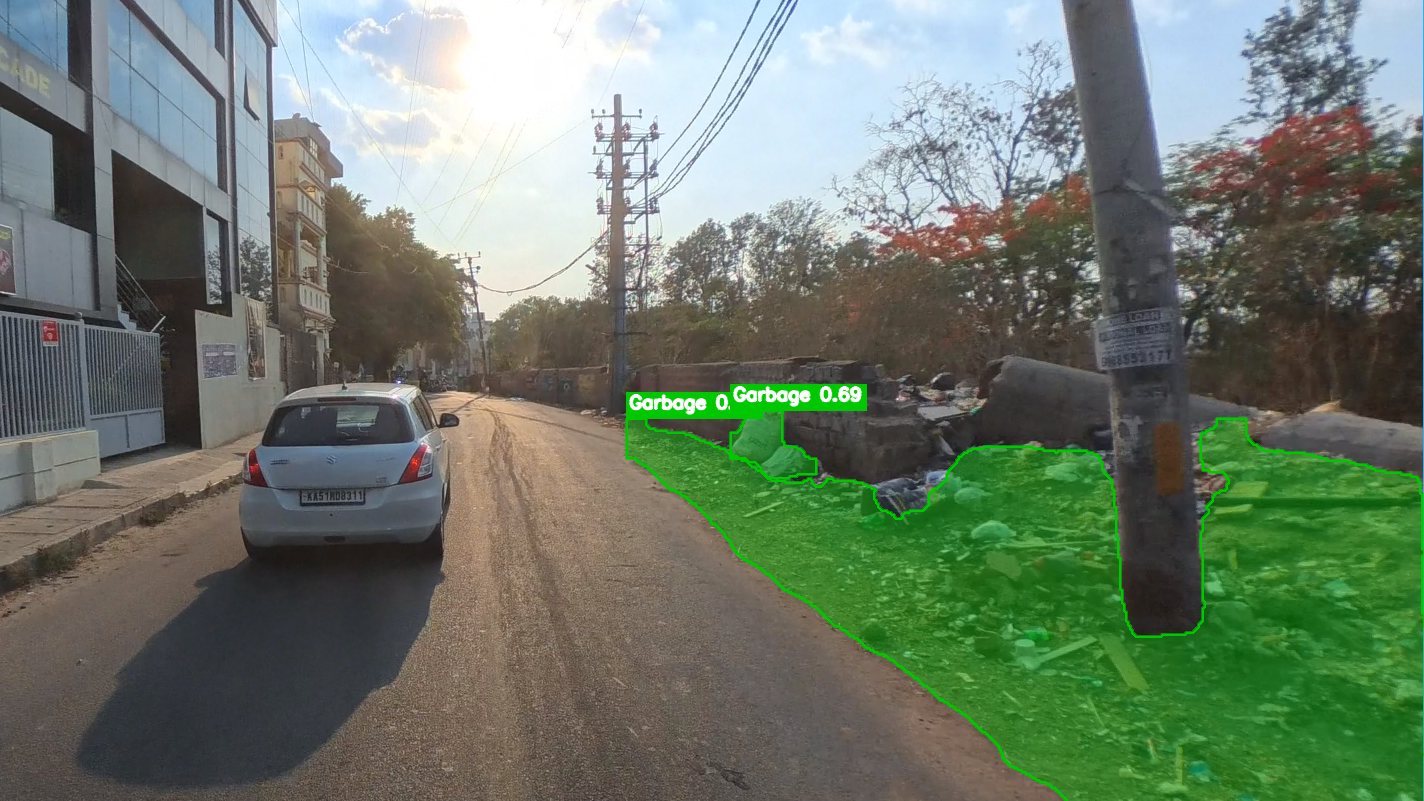
It has been trained to know what garbage on a street looks like. Faces and number plates are blurred on the device.
Step 03 / 05 · Tag
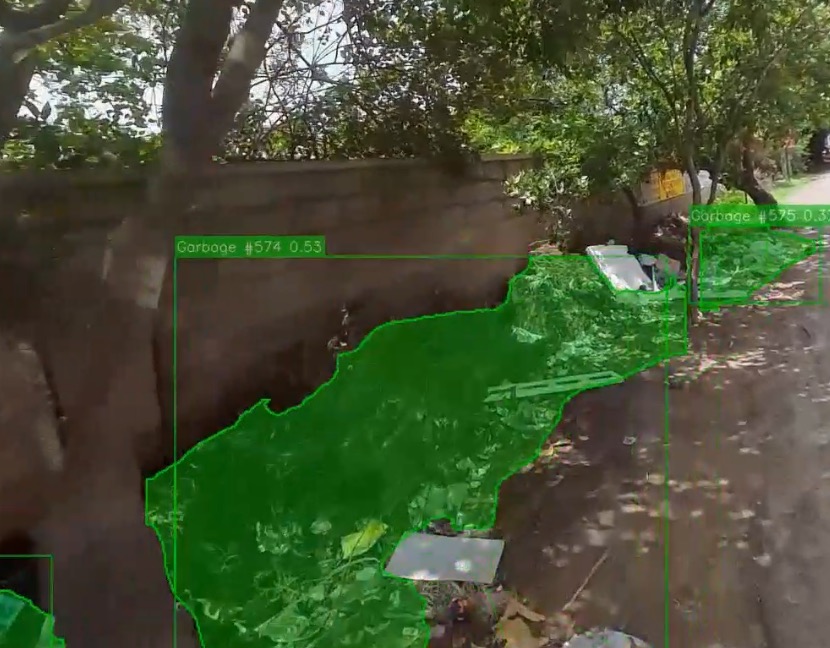
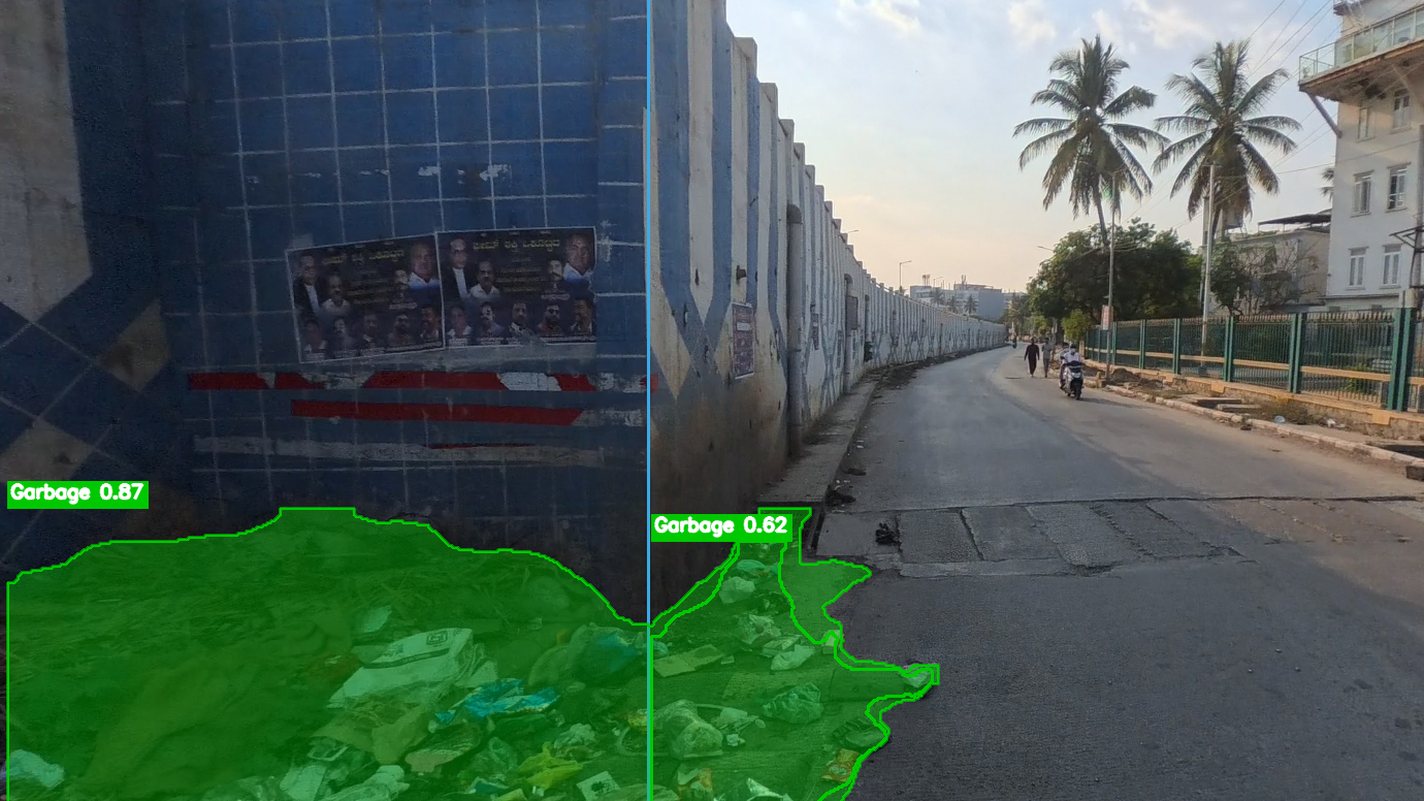
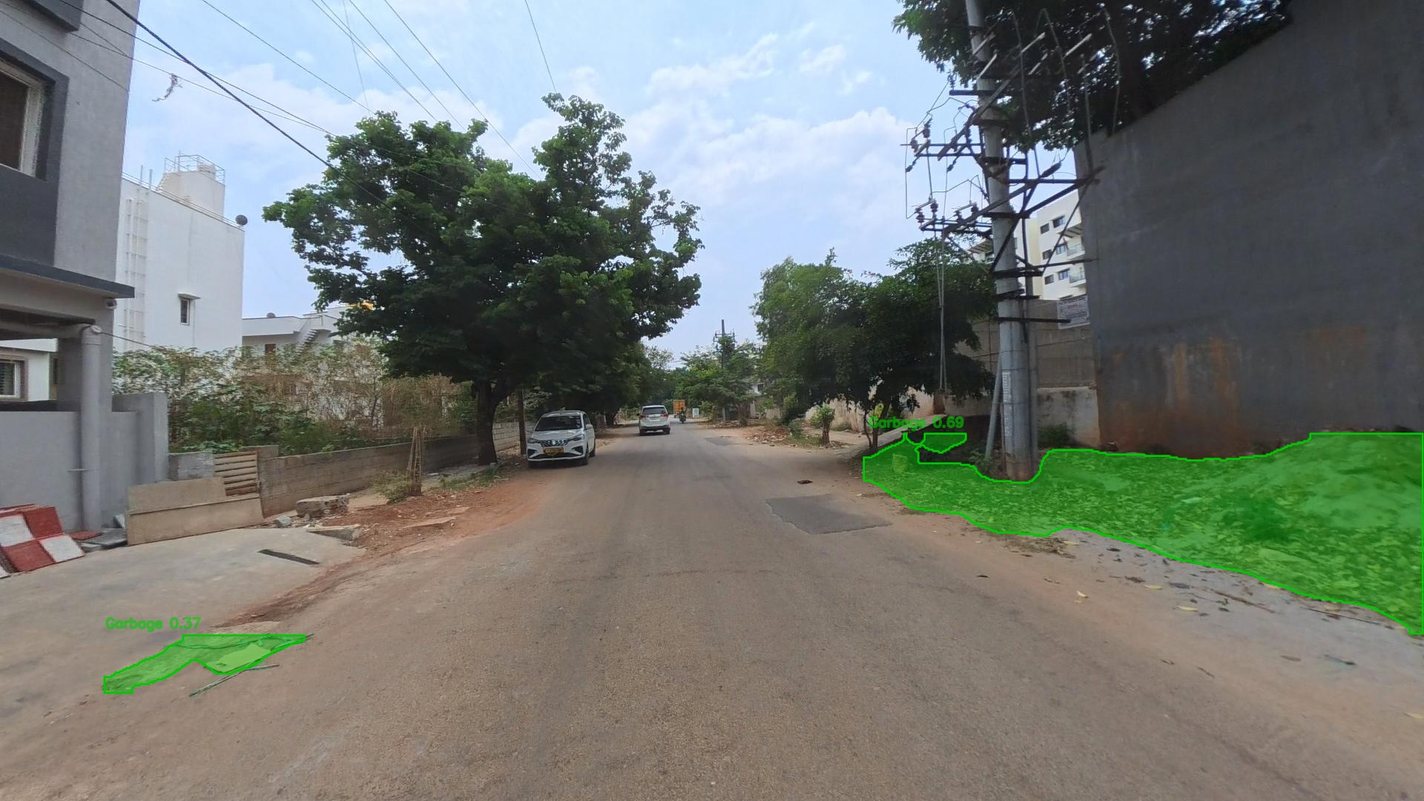
Each pile is tagged with its picture, location, time, severity, outline and a unique ID.
Step 04 / 05 · Report
Detections reach the city's platform while the vehicle is still driving. The official assigns each one to a contractor, with nearby jobs bundled into one trip.
Step 05 / 05 · Verify
The contractor uploads a photo of the same spot as proof of work, and the next survey checks it again.
Swachathe platform · your ward
✓Proof of work uploaded

Residents can report it from the citizen web app. It lands on the same platform, with the same photo, location and tracking.
Open the citizen web app ↗Boxed, outlined and scored as the vehicle passes. Real captures from our device.
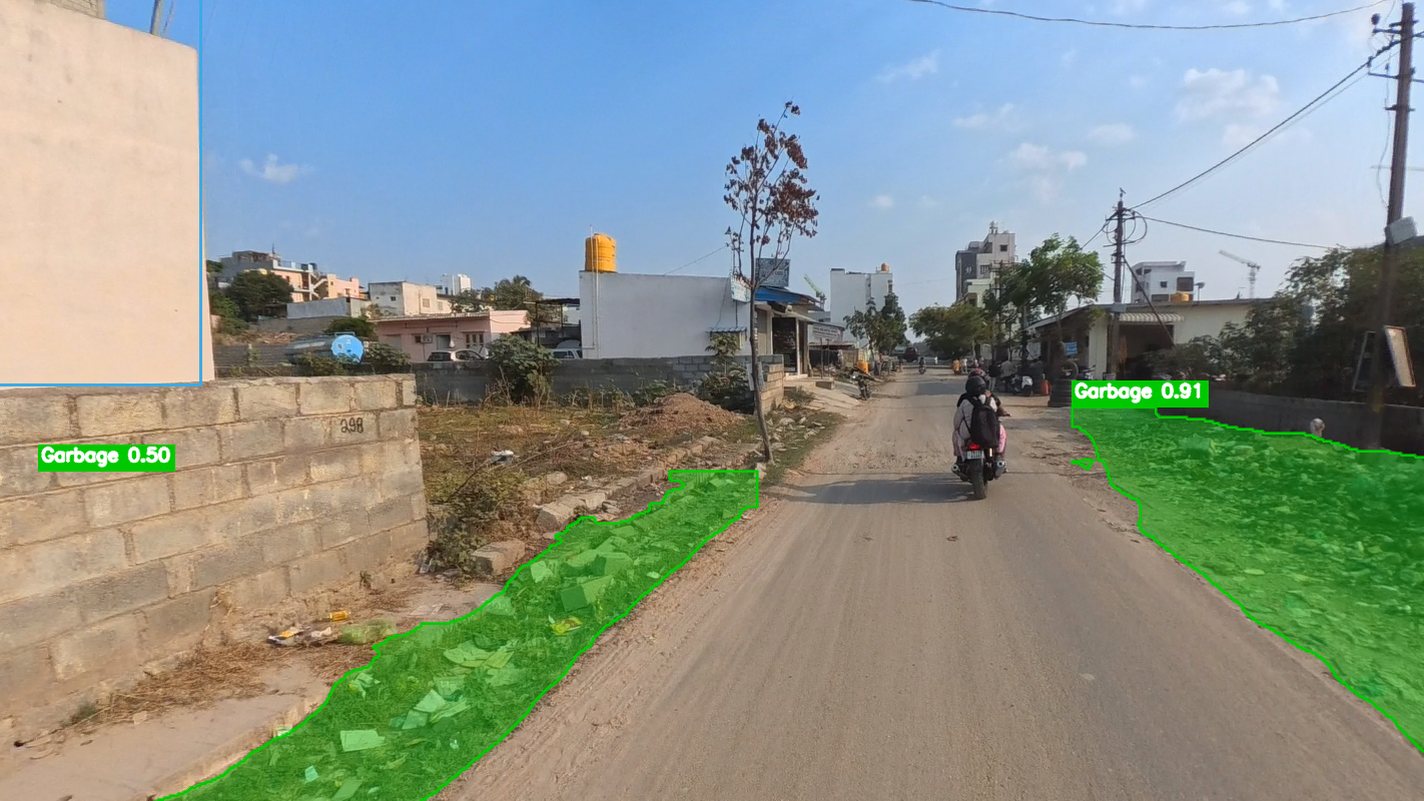
The same pile, two ways. Watch the day counter.
Approximate days, for illustration. To be confirmed with pilot data. Assigning and clearing are done by the city and its contractors; Swachathe makes every step visible.
The same detection standard is applied to every street we pass.
Each ward is swept on the same route, to the same criteria.
Every issue arrives with a photograph, a coordinate and a time.
Adding a ward means adding a device, not more manual inspection.
Detections reach the platform while the vehicle is still driving.
Nothing waits for a complaint before it reaches a contractor.
Jobs are bundled into one optimised trip instead of many.
Open issues and delays are visible ward by ward.
Fewer piles means fewer mosquitoes, rats and stray animals, and less smoke from burning.
Garbage that never reaches the drain can't block it when the rains come.
Jobs are bundled into one optimised trip instead of many.
Clean towns rank higher in Swachh Survekshan and give pourakarmikas the credit they deserve.
What India and the UN ask of every town, and how Swachathe helps meet it.
Every open pile found and tracked, so garbage-vulnerable points get closed.
Swachh Bharat Mission–Urban 2.0
A geo-tagged, time-stamped photo and status for every pile.
GFC Star Rating Protocol, 2022
Month-on-month improvement a town can point to.
MoHUA annual survey
A digital record of every pile found and cleared.
In force 1 April 2026
Street-level evidence for the hardest part of indicator 11.6.1.
UN Sustainable Development Goals





Faces and number plates are blurred on the device, in real time, in line with the Digital Personal Data Protection Act, 2023. Unblurred faces and plates are never stored.
We keep the photo of the pile, where and when it was seen, and how it was cleared. Nothing about the people who pass by.
If the network drops, records wait in an encrypted store on the device and sync when it returns.
See Swachathe on your own wards. We'll show you the device, the platform and what it finds.
Spotted a pile on your street? Report it from the citizen web app and follow it until it's cleared.
Open the citizen web app ↗No. It looks for garbage. Faces and number plates are blurred on the device before anything is saved.
Your city's own teams and contractors. Swachathe finds each pile, reports it to the city and keeps track of it until it's gone.
No. Our device does the surveying; your teams use the Swachathe platform to assign and close each pile.
That's up to the city's teams. Swachathe makes sure they know straight away and shows how long each pile stays open.
Not yet. It works in daylight for now, and the camera handles glare, shade and wet roads.
A pilot is starting soon in Malleshwaram ward, Bengaluru West, and Arsikere is going live soon. Want your town next? Book a demo.